Scrile Connect Review: What Operators Should Know
Scrile Connect is a premium, self-hosted OnlyFans clone you build and run. Here is what it costs operators, who it fits, and the managed alternative.
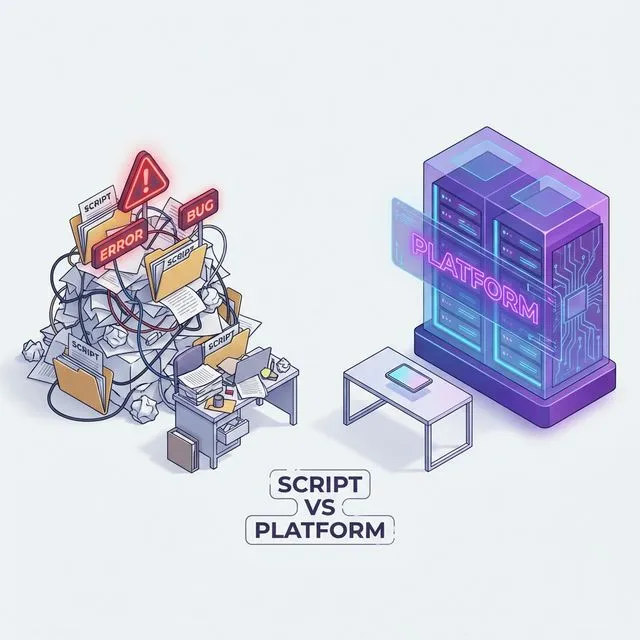
Search Scrile Connect and you find a premium clone-script vendor promising a fully custom, white-label fansite you own and host yourself. For an operator weighing how to launch, that ownership is both the appeal and the catch. Scrile Connect sells you the software and a tailored build; it does not run the platform for you. The real question is not whether the software works, but which operational burden you take on once real subscribers and real money move through it. This guide breaks down what Scrile Connect is, what it actually costs to run, who it fits, and the managed alternative that removes the operating stack entirely.
What is Scrile Connect?
Scrile Connect is a self-hosted membership and fansite platform from Scrile, a long-running software vendor in the adult and creator space. Unlike a fixed-price download, it is sold as a quote-based, custom build: you brief the vendor, they deliver a white-label site configured to your brand, and you host and operate it on infrastructure you control. It sits at the premium end of the clone-script market, closer to a managed custom development project than an off-the-shelf script.
That positioning is the appeal. You get a tailored deployment, your own branding and domain, and the core subscription mechanics (paywalled posts, pay-per-view messages, tips, and a creator payout ledger) without writing them from scratch. The catch is structural: you own the deployment, which means you also own every server, every patch, every payment relationship, and every compliance obligation attached to it. Scrile Connect is software you operate, not a service that operates for you.
How much does Scrile Connect cost?
Scrile Connect does not publish a fixed price. It quotes per project, and the premium tier reflects the custom build rather than a license you download. For budgeting, treat that build fee as the smallest line in a three-year plan. The recurring operating stack below repeats every month on any self-hosted platform, and it is the part that decides what the platform really costs.
| Cost line | Typical range | Who pays on a self-hosted build |
|---|---|---|
| Custom build / license | Quote-based, premium | You (largely upfront) |
| Server hosting | $50-200/mo | You |
| Video CDN and storage | $100-1,000/mo | You |
| High-risk processor setup | $500-2,000+ upfront | You |
| Developer time (fixes, patches) | $50-150/hr | You |
| Compliance and age assurance | Ongoing, variable | You |
The premium upfront buys polish, customisation, and a real support relationship, which the cheap marketplace scripts do not offer. What it does not change is the shape of the spend: the operating lines stay on your books for as long as the platform exists. A fuller version of this maths sits in our breakdown of how much it costs to build an OnlyFans.
What Scrile Connect includes, and what it leaves to you
The build buys the application and the customisation. The platform around it, the part that actually serves paying subscribers, is a separate project you fund and run yourself. The split is consistent with every self-hosted vendor; Scrile Connect just sits at the higher-touch end of it.
You source and run hosting, which for a video product means a media pipeline and a CDN, not a single cheap server. You apply every security patch, because an unpatched payment-handling app is a breach waiting to happen and self-hosted adult platforms are a known target. You secure your own high-risk payment processing, with the application fees, rolling reserves, and chargeback liability that adult merchant accounts carry. You build age assurance and KYC to a standard regulators will accept. And when something breaks at 2am on launch night, the support queue is you, even with a paid vendor tier behind you for the software itself.
Each of these is a recurring job, not a one-time setup, and together they are the actual business of running a platform. The custom build is one component inside that business, priced as if it were the whole thing.
Scrile Connect vs a managed white-label platform
The managed white-label inverts the trade. Instead of commissioning software and assembling the platform around it, you run a finished platform on your own domain and branding while the provider carries hosting, payments, compliance, and age assurance for a recurring fee or revenue share. The table below lines up the two models on what an operator actually owns.
| Dimension | Scrile Connect (self-hosted) | Managed white-label (Wick) |
|---|---|---|
| Hosting and uptime | You | Provider |
| High-risk payment processing | You source and own | Provided |
| Security patching | You | Provider |
| Age assurance and KYC | You build | Provider |
| Time to launch | Weeks (custom build) | Days |
| Cost shape | Premium build plus operating stack | Predictable recurring fee plus a 1% to 3% commission |
| Deep customisation | Yes, you own the build | Configurable, not core-rewritable |
| Brand, domain, revenue | Yours | Yours |
Wick is the managed column, so read it knowing whose review this is. Scrile sells you an application and you assemble the platform around it. Wick sells the assembled platform and you never touch the parts. Where Scrile wins outright is ownership of the build: you hold the code, you can rewrite the core, and nobody sits in your revenue. Wick charges a monthly plan and a small commission (3% on Starter, 1% on Professional) rather than a licence fee, and gives you no way to modify the engine, which rules it out for an operator whose model is structurally unusual, or who wants to own software permanently and has the team to do it. What it removes is every row in the right-hand column above.
The honest read is that price and customisation buy control, not freedom from operations. This is usually what sends operators looking for a Scrile Connect alternative: they want the owned, branded outcome without the self-hosted operating load. Scrile Connect gives an operator a tailored, owned platform; a managed white-label gives a faster, lower-overhead launch with the operating risk carried by someone else. The trade you are weighing is deep control against operational load, which is the same decision laid out in our build your own OnlyFans vs buy comparison and across the wider clone-script roundup.
Who is Scrile Connect actually right for?
Scrile Connect is the right tool for a specific operator and the wrong one for a first-timer who picks it because it looks like a shortcut. Be factual about the trade rather than dismissive: the custom build gives genuine ownership and deep customisation, and for the right operator that control is exactly what the premium price buys.
It makes sense when you already have, or intend to hire, the operational capacity to run infrastructure: a sysadmin or DevOps contractor, an existing or attainable high-risk processor relationship, and the appetite to own patching, uptime, and compliance. It also makes sense when your product genuinely needs customisation a managed platform will not allow, because owning the build is the only way to rewrite the core.
It does not make sense when the deciding factor was that a custom build felt more “yours” than a managed platform while the operating reality was never priced in. The two failure points that freeze a new platform fastest, a frozen merchant account and an age-assurance gap, are exactly the parts a self-hosted build hands you to solve alone. High-risk processing is hard to win and easy to lose, and the PCI Security Standards Council sets the security bar your deployment has to clear before a processor will keep you. Age assurance is tightening in parallel: obligations like the UK Online Safety Act, enforced by Ofcom, land on the operator running the platform, which on a self-hosted build is you.
How to decide between Scrile Connect and a managed platform
The decision follows your appetite for running infrastructure, not the upfront quote. Count the jobs you are taking on, not the dollars the build saves over a cheaper script.
Choose Scrile Connect if you want to own the deployment, need deep customisation, and have the operational capacity to host it, source a processor, and keep it patched and compliant. Choose a managed white-label if your priority is a compliant, billable platform live quickly, with payments and age-assurance risk carried by the provider, and you can trade a percentage of revenue for never sourcing a processor or patching a server. A self-hosted build makes you an infrastructure operator before you are a content business; a managed platform lets you stay a brand-and-marketing operation. The economics of that trade are worked through in our look at clone scripts versus white-label platforms. The right answer is whichever leaves you spending your time on the part of the business that actually earns.
If you want the outcome a clone script promises without hosting and maintaining one yourself, Wick runs the whole platform for you. Compare your options